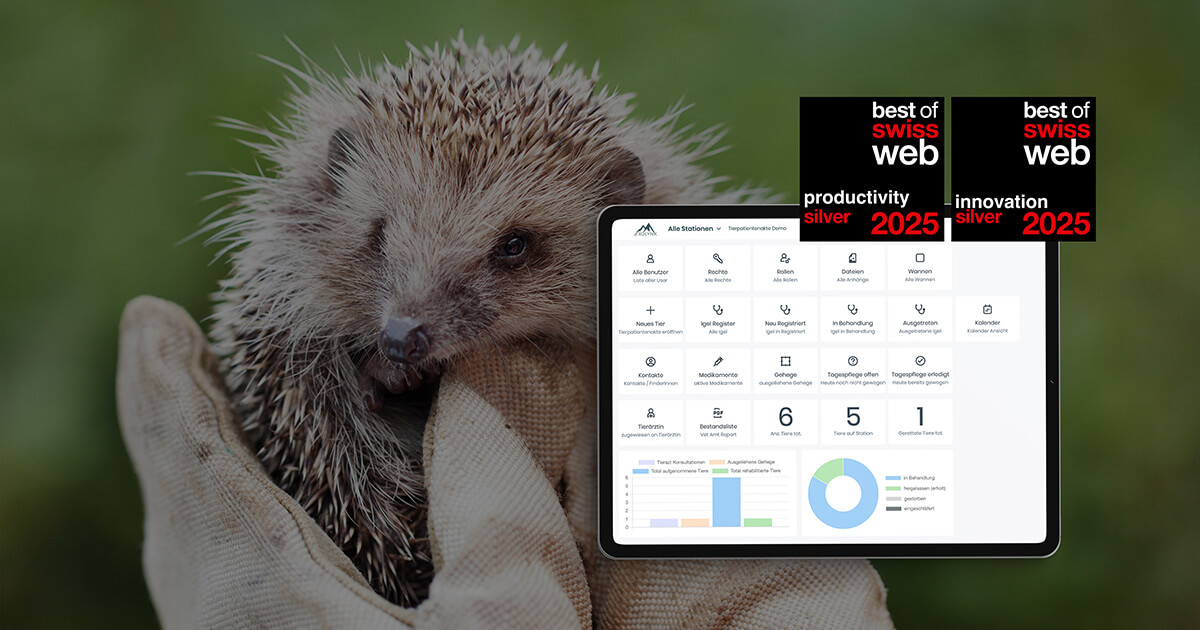
Saving Wildlife, Unifying Data
Every Animal Counts – and So Does Every Hour
Stiftung Wildstation Landshut in Utzenstorf (Canton Bern) takes in hundreds of injured and orphaned wild animals each year – from hedgehogs and birds of prey to species on the IUCN Red List. Behind every animal there is a medical history, a finder, often a sponsor, and a network of donors that keeps the station running.
What sounds like a clear mission from an animal welfare perspective was an administrative patchwork: three disconnected systems – two MS Access databases for contact and payment management, plus VetSet for animal records –, manual processes at every turn, and an Excel spreadsheet as the statistical backbone. Together with Exolynk, the foundation has fundamentally changed this – and has been live on a fully integrated platform since April 1, 2026.
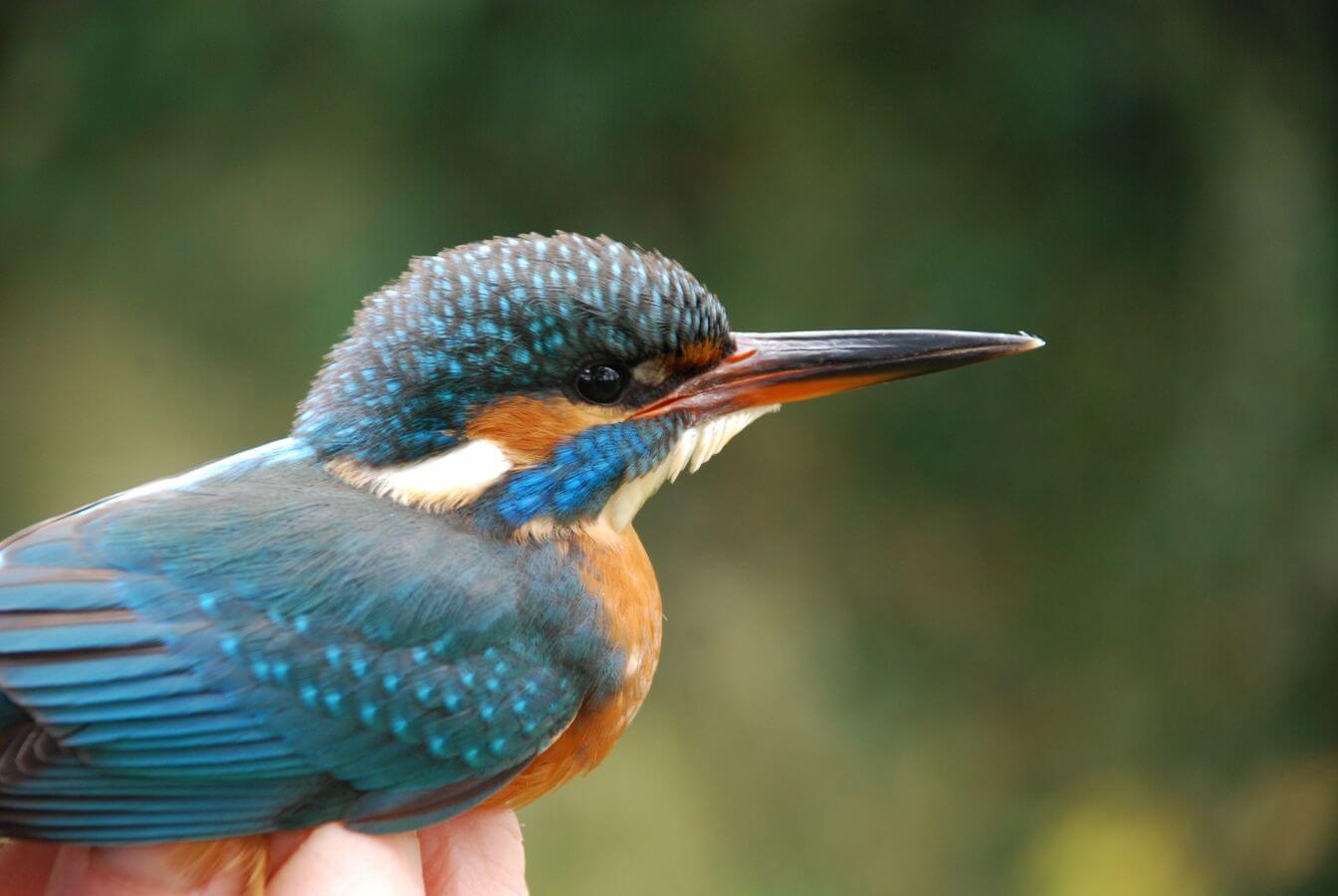
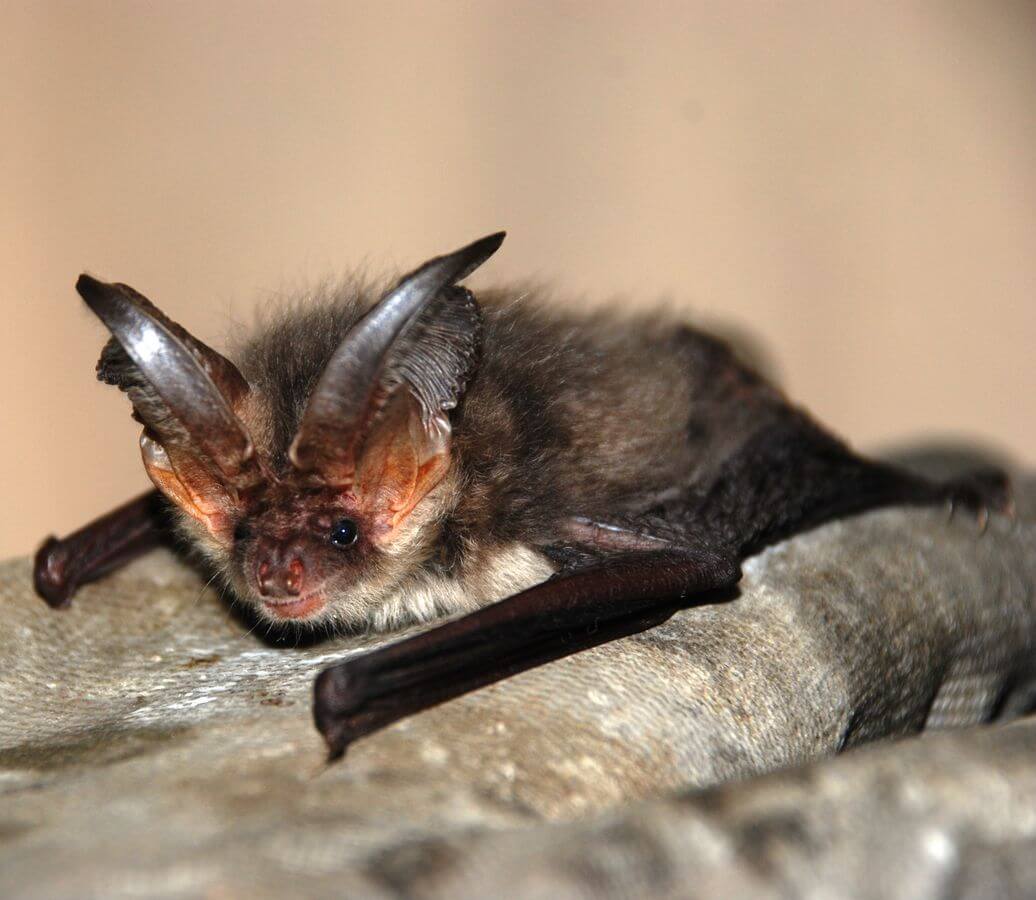
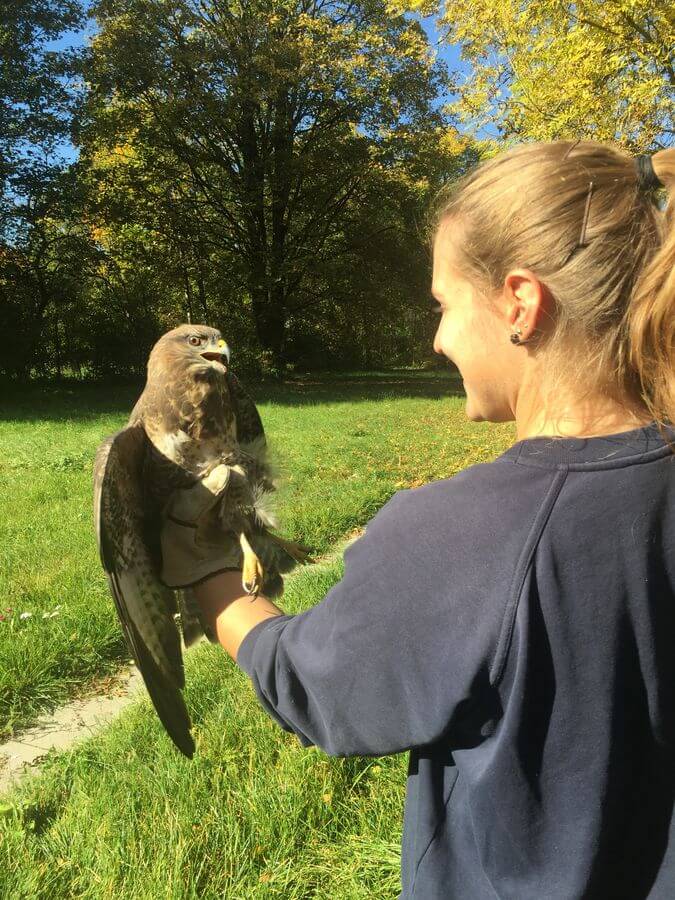
When an animal comes in, every minute counts. Having to keep the same data current across three different systems at the same time cost energy that would have been better spent on the animal.
The Starting Point: Three Systems, Triple the Work
The pain points were concrete and familiar: anyone wanting to register a new donor, an animal finder, and a sponsorship holder had to enter the same address in multiple systems. A change – a new address, an updated email – had to be manually corrected everywhere.
CRM & Donor Management (MS Access):
- Separate database for sponsorships, donations, and newsletter recipients – no shared foundation
- Donation acknowledgements created individually and dispatched manually
- Addresses for bulk mailings had to be laboriously extracted from Excel spreadsheets
- No access from the wildlife station itself – only accounting staff had system access
- No historization: changes to records untraceable, no recovery possible
Payment Management (MS Access):
- Separate database for incoming payments with no direct link to the CRM
- Every payment manually matched to a donor – time-consuming and error-prone
- No automated import from bank files, RaiseNow, or TWINT
Animal Database (VetSet):
- No connection to the CRM – finders, sponsors, and donors entered up to three times
- Analytics ran through a complex Excel statistics system
- Health data captured on “white sheets” – unstructured and non-evaluable
- No customization of fields or data entry screens possible
No More System Fragmentation: Exolynk as a Networked Operating System
Anyone who worked across these systems daily knew the problem first-hand: data had to be exported from one application, imported into another, or simply re-entered manually. Every system boundary was a source of friction, errors, and lost time.
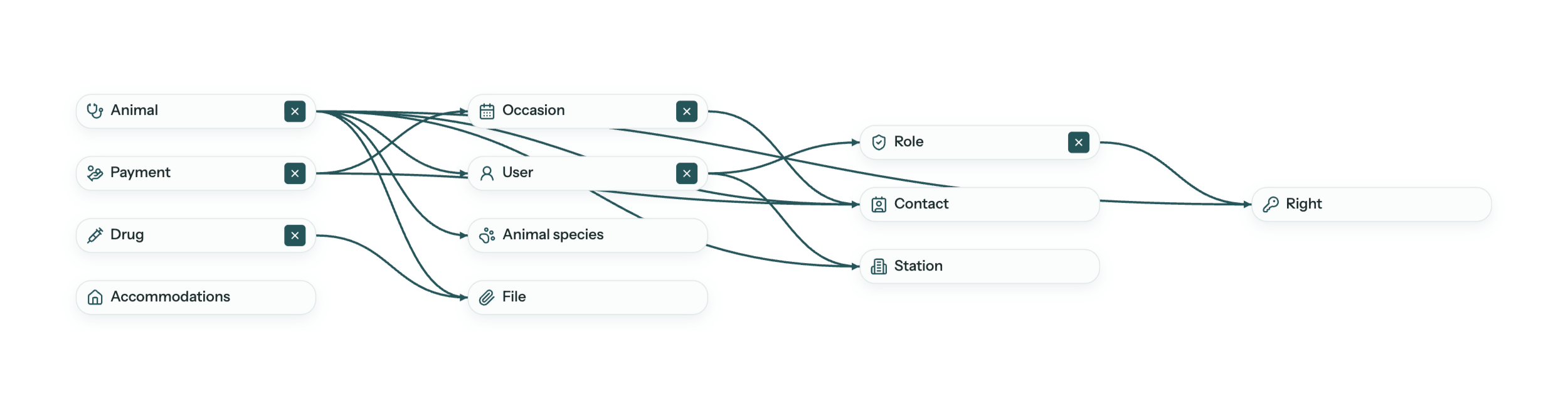
The goal was therefore not simply a new tool – but a paradigm shift: away from isolated point solutions, toward an integrated platform that works like a networked operating system for the entire organization. Just as an OS ensures that all applications share the same underlying resources, Exolynk ensures that all departments – veterinary care, donor management, accounting, analytics – operate on a single, consistent data foundation. One entry. One source of truth. No synchronization needed.

The Solution: Everything on One Platform
Exolynk developed a tailored solution on the Exolynk digitalization platform for Stiftung Wildstation Landshut. It brings CRM, animal patient records, donation management, and dashboards under one roof – browser-based, hosted on Swiss servers, and backed up daily in a decentralized and redundant manner.
Centralized CRM with Address Validation and Duplicate Check
Every person – whether donor, sponsor, animal finder, or veterinarian – is entered once and can be assigned to any number of records: to an animal as its finder, to a donation as its source, to a sponsorship as its sponsor. No more triple data maintenance.
Integrated is automatic address validation via the Swiss Post API: addresses are validated and corrected at the point of entry. A duplicate check prevents double entries. The complete history – incoming donations, active sponsorships – is seamlessly documented per contact.
Exolynk as the master data system: The CRM is not just another database – it is the master data foundation for the entire platform. Contacts are created once and referenced by every other module: payment matching, bulk mailings, animal dossiers, dashboards. When an address changes, it is immediately correct everywhere. No inconsistencies between departments, no manual reconciliation, no outdated duplicates. Master data management is no longer a task delegated to individual staff – it becomes a property of the system itself.
Automated CAMT Import and Donation Management
Previously, payment reconciliation ran entirely manually: bank statements were downloaded from e-banking, and incoming payments were individually compared against the customer list in Excel and MS Access and assigned by hand. It was often unclear whether an incoming payment was a donation, an event contribution, or a sponsorship payment – a question that had to be investigated and resolved each time. Errors and delays were inevitable.
With Exolynk, this process is nearly fully automated. The platform imports CAMT files from the e-banking of multiple banks as well as RAF files from RaiseNow and TWINT, automatically matching payments to existing donor records. The standard case runs fully automatically – payment reconciliation only needs to be reviewed and posted with a single click.
Earmarked payments are automatically recognized: the system reads the payment reference, compares it against known transaction types, and proposes the correct posting and assignment directly. What previously took hours is now a review task.
Donation management distinguishes between one-time and recurring donations, sponsorships, memorial donations, condolence donations, and event contributions – the complete payment history is accessible per donor with one click.
A further building block of automatic matching is the individual payment reference stored for each contact in the CRM. It is printed on payment slips and QR invoices, allowing the system to unambiguously assign incoming payments to a specific person without name matching – even when the name or address differs slightly.
For occasion-linked donations, the event module is available: a payment – whether a memorial donation, condolence donation, or contribution from a fundraising campaign – can be assigned to a defined event, which in turn references its own contact person (e.g. the bereaved family). All contributions for a given occasion can then be consolidated, evaluated, and acknowledged at any time.
Automated Bulk Mailings and Direct Mail
Automated letter templates are available for the most common mailing occasions. The required master data is automatically prepared and provided for further processing by the print shop.
Optionally, individual letters can be created, printed, and dispatched directly from the system via integrated print and mailing services. Every dispatch is automatically logged in the contact history. Details on this solution here .
Animal Patient Records with IUCN and Swiss Topo
Every admitted animal receives a digital dossier: species, breed, age, admission weight, health status, admission reason, ring number, location found, and release location – structured, evaluable, with a complete change history. The finder and the releaser are recorded as separate contact links – who brought the animal in and who ultimately releases it back into the wild is fully documented. Offspring can be recorded as linked sub-entries, which is relevant when raising juvenile animals.
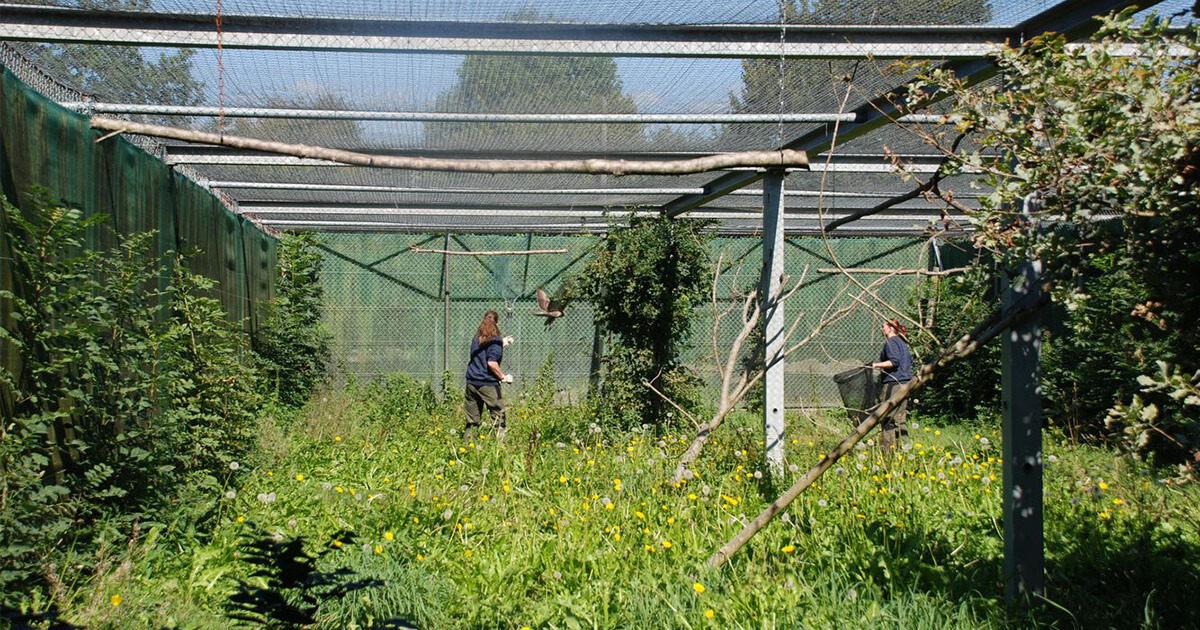
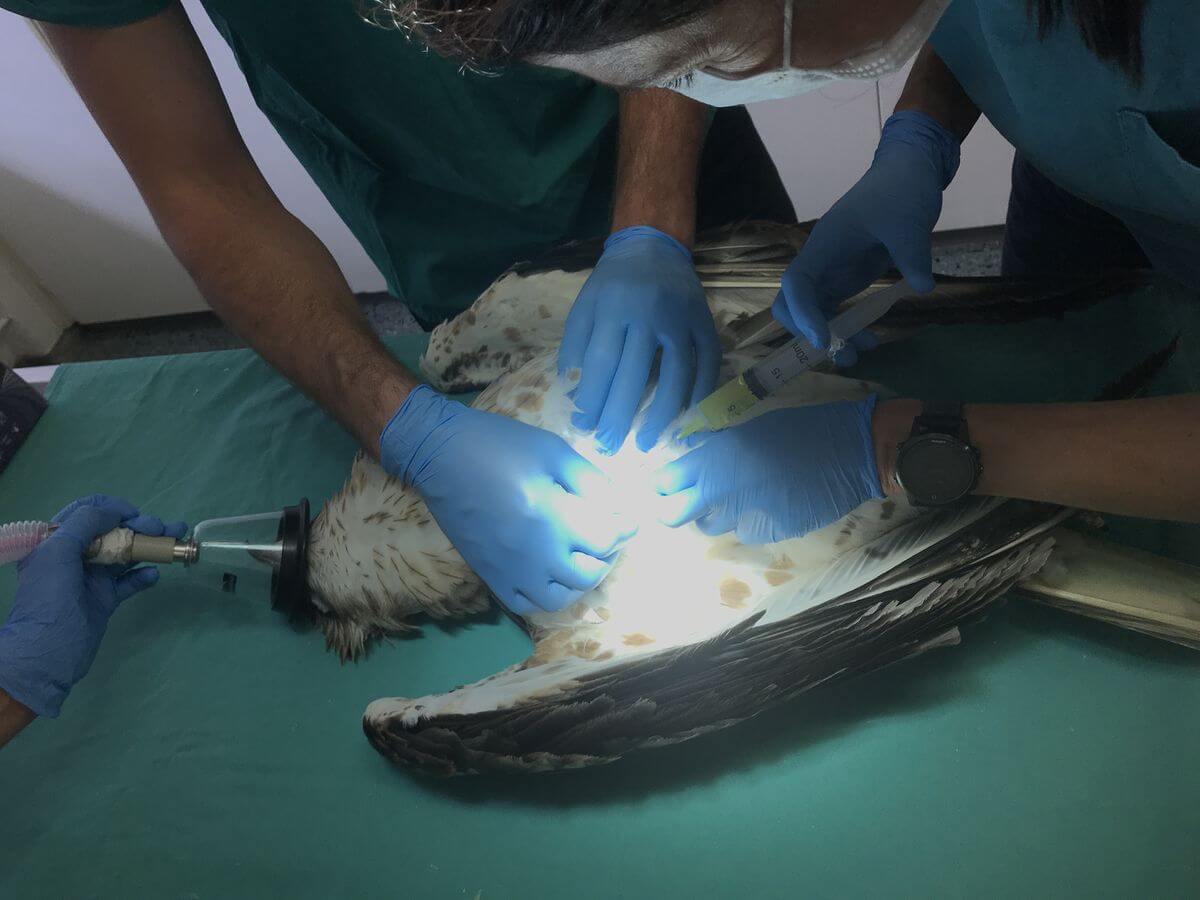
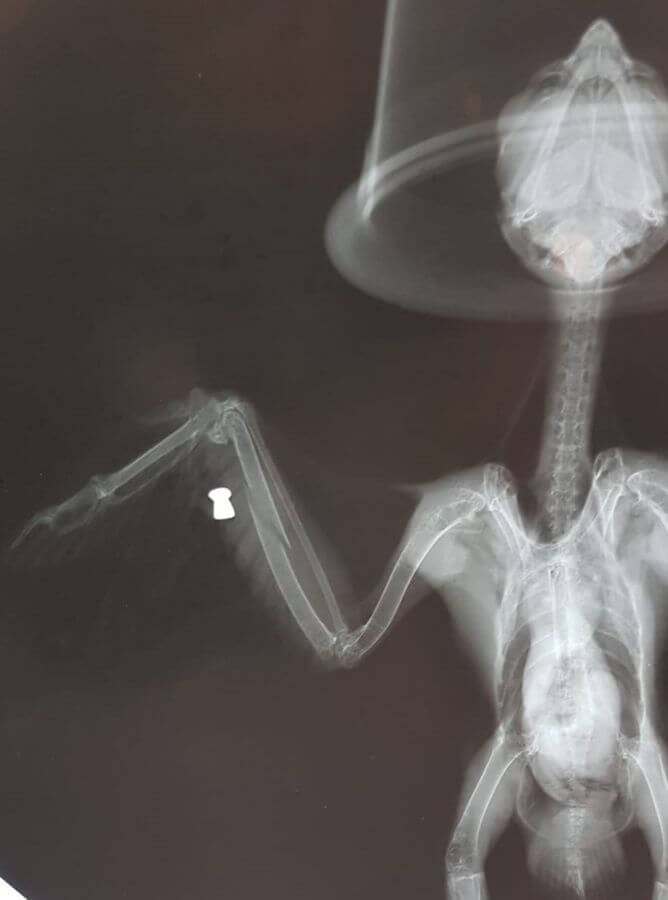
Each animal is also assigned to an enclosure – a room, aviary, or outdoor habitat. The housing module maps the actual facilities of the wildlife station hierarchically and provides a real-time view of current occupancy at any time. Documents such as X-rays, lab reports, or invoices can be stored directly in the record; treatment protocols are customizable to SWL specifications.
Two technical integrations set the solution apart:
- IUCN Species Directory: Every recorded animal is automatically matched against the IUCN List of Threatened Species – making it immediately visible whether the animal is a protected or endangered species.
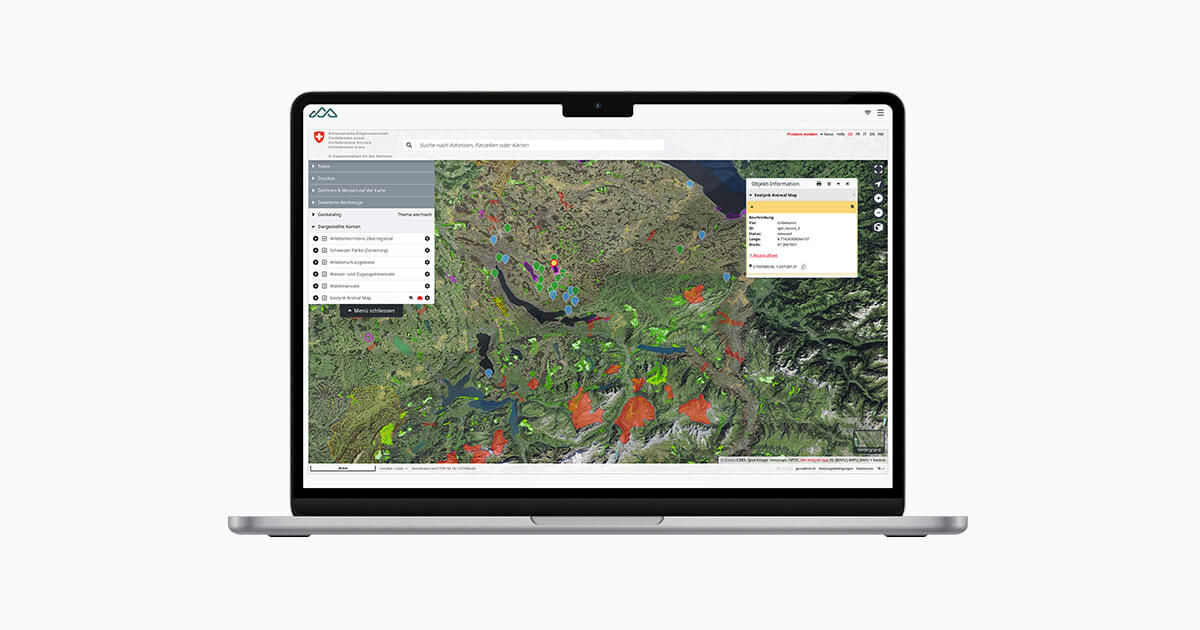
- Swiss Topo REFRAME API: Location found and release location are entered in WGS84 (GPS standard) and automatically converted to the Swiss coordinate system LV03. The coordinates are output in two separate fields (E easting / N northing) – exactly the format required by the Swiss Ornithological Institute (Vogelwarte Sempach) for ringing data, and compatible for direct submission to national data exchange systems.
Geodata for Wildlife Conservation
Integrated Medication Directory
Medications are not managed separately but are linked directly to the animal database. The medication directory includes dosage information by species and is accessible directly from the care protocol – the veterinarian selects the medication and the species-specific dosage is shown as a reference. Discontinued or no longer used preparations can be deactivated and no longer appear in the selection, but remain visible in historical records.
Dashboards, Statistics, and Wildlife Rehabilitation Map
Six individual dashboards fully replace the previous Excel statistics system:
| Dashboard | Content |
|---|---|
| Animal population | Current occupancy, admission reason, animal groups and species |
| Release rate | Recovery rate, length of stay, discharge reason (release, death, euthanasia) |
| Species protection | Admitted species by IUCN protection status (Red & Green List) |
| Donation behavior | Development by donor group (top donors, companies, private individuals) |
| Memorial donations | Memorial and condolence donations reported separately |
| Wildlife map | Interactive Swiss Topo map showing locations found and release locations for all animals |
Reports can be exported as PDF (via Typst), CSV, or displayed directly as dashboard views with charts.

Fine-Grained Access Management
With 5 core users and up to 95 light users (occasional access), different departments work with clearly separated data worlds. The platform distinguishes four roles with graduated permissions at the record level:
| Role | Access |
|---|---|
| Animal Caretaker | Enter & edit animal data and contacts – no access to donation data |
| Veterinarian / Management | Additionally manage medications, species, and housing; correct discharged animals |
| Accounting | Upload payments, view contacts including donations, newsletter export |
| Operations Administration | All permissions including user management and comprehensive reporting |
The strict separation – animal caretakers structurally have no visibility of financial data, accounting cannot delete animal records – is not a configuration option but a property of the system.
Data Migration: Clean Data as the Foundation
A new system is only as good as the data living inside it. This is one of the central lessons from migration projects – and one that is frequently underestimated. Organizations that do not actively address the quality problems in their legacy data simply carry them forward into the new system.
For Wildstation Landshut, migrating approximately 122,800 records from two MS Access databases meant addressing concrete data quality issues:
- Field format harmonization: Addresses were stored in varying structures – postal codes separate or combined, salutations inconsistent, municipality names abbreviated or spelled out in full
- Duplicate consolidation: The same person appeared in the CRM and payment database under slightly different spellings – after migration, each contact exists exactly once
- Format normalization: Date and amount fields from different Excel conventions were standardized
- Data validation: Invalid email addresses, outdated street names, and inconsistent species names were identified and corrected or flagged for review
Exolynk ran this process iteratively: first a test import with random sampling and a feedback round, then targeted corrections, and finally the full production import with a detailed log. The result is a consolidated, validated data foundation – one on which the system can deliver its full value from day one.

Exolynk vs. Microsoft Access
Timeline: Ten Months from Kickoff to Go-Live
| Phase | Period |
|---|---|
| Kickoff & Conception | June – August 2025 |
| Realization & Configuration | August – October 2025 |
| Test Operation with Live Data | October 2025 – March 2026 |
| Go-Live | April 1, 2026 |
Exolynk Modules Used
The following solution components were deployed in the Wildstation Landshut project:
| Module | Content | Link |
|---|---|---|
| Animal Patient Records | Animal dossiers, care protocol, IUCN matching, Swiss Topo | Product page |
| CRM & Donor Management | Contact management, CAMT import, bulk mailings, direct mail | Product page |
| Data Migration | Analysis, harmonization, cleansing, production import | Service |
| Geodata & Wildlife Map | Swiss Topo REFRAME API, interactive location map | Blog post |
| Alternative to MS Access | Why modern platforms replace Access databases | Blog post |
Conclusion
Stiftung Wildstation Landshut demonstrates how a non-profit organization with complex, cross-functional requirements – CRM, veterinary medicine, fundraising, direct mailing, and regulatory data exchange – can benefit from an integrated platform. The decisive step: moving away from isolated systems with manual synchronization and media breaks, toward a networked platform where all departments operate on the same, consistent master data.
What previously had to be maintained three times over is now entered once – and is immediately correct everywhere. What previously filled Excel tables is now a live dashboard. What previously required manual letter production now goes out automatically. And what previously got lost between system boundaries – consistency, completeness, traceability – is now a guaranteed property of the platform.
We rescue wildlife – that is our mission. With Exolynk, we can finally focus on that completely again. Everything else runs in the background.
Do you have similar requirements for your organization? Let’s find out together what Exolynk can look like for you.